
Abstract
This paper analyzes the role of Tunisia’s demographic transition in determining renewed political unrest in the years following 2020. While the 2011 revolution coincided with the end of a youth bulge condition, Tunisia has since entered a demographic dividend phase, thus characterized by a large working-age population and by consequently heightened societal expectations. The government’s failure to turn this demographic opportunity into economic growth through public investments, coupled with the COVID-19 crisis and the authoritarian turn under President Kais Saïed, has contributed to deepen public dissatisfaction. Drawing on the theory of demographic transition, this paper argues that the existing period of instability reflects the unfulfilled expectations of a maturing society, giving a partial explanation of current unrest through a purely demographic lens.
Introduction
Conflicts, uprisings and turmoil, as part of a highly complex political scenario, are to be studied and analyzed as the result of a vast and heterogeneous set of causes. The factors belonging to this set are diverse in nature: we can find economic drivers like rising unemployment, social drivers like disparities in education levels across social classes, as well as political drivers like restricted access to individual and community freedoms. Traditionally, these factors have received significant attention in the scholarly literature on the origins of conflict, while some other approaches are relatively younger and have been gaining researchers’ attention only in the last few decades. Adopting the framework of the demographic transition theory, scholars have identified strong correlations between specific population trends and the risk of protests happening. For example, the concept of youth bulge has proven particularly effective in systematically predicting and explaining these phenomena: while many different definitions exist and have been used in scholarly literature, the most commonly used definition of youth bulge refers to a situation in which individuals between 15 and 24 years of age make up at least 20% of the total population, usually taking place between stages 1 and 2 of the dive-stage demographic transition model. [1] Over the last two decades, youth bulge theory has been vastly applied in the analysis of the 2011 Arab Spring uprisings, as several countries in North Africa and the Middle East exhibited typical youth bulge conditions in the years leading up to the revolts. The case of Tunisia stands out as a peculiar case of political transition following the Arab uprisings, marked by the fall of Ben Ali’s autocratic regime and the instauration of democratic rule. However, since 2021, the country has seen newwaves of political instability, with citizens returning to the streets to protest against the government’s management of the COVID-19 pandemic and, more broadly, against poor economic performance. Since President Kais Saïed’s power grab in July 2021, Tunisia has entered an authoritarian shift marked by repression of dissent, nationalist rhetoric fueling xenophobic violence, and an ongoing standoff with international donors over economic reforms. In 2022, he dismantled the independent Supreme Judicial Council and dismissed dozens of judges, actions the opposition has described as a coup. This renewed instability happens in the context of Tunisia’s ongoing demographic transition, characterized by a rising median age, raising interesting questions about the relationship between the ongoing demographic trends and turmoil. This paper aims to address the following research question: “How has the demographic transition contributed to renewed political unrest in post-Arab Spring Tunisia?” It argues that, after the decline of the youth bulge, the passage to a stage of demographic dividend has generated increased expectations that, coupled with poor social, political and economic performances, caused destabilizing effects. The remainder of this paper is structured as follows: Section 2 discusses the existing demographic literature on the Arab Spring’s upheavals and, in particular, on the Tunisian case. Section 3 presents the analysis of the relationship between demographic phases and protests in Tunisia. Section 4 concludes the paper.
Literature review
The correlation between political instability and age structure of a country has long been object of research within scholarly literature, starting from the relation between a large number of young people and increased risk of turmoil. Although this idea is not new to academic literature, the term “youth bulge” was first theorized only in 1995 by Gary Fuller’s article ‘The Demographic Backdrop to Ethnic Conflict: A Geographic Overview’, presented during a conference organized by the Central Intelligence Agency.[2] The term then gained attention in American scholarly literature, particularly through the work of Jack Goldstone who, focusing on the Arab world, first emphasized how large youth cohorts aspiring to political roles and excluded from political participation may resort to violent conflict as a way of pressing for democratic reform.[3] In Europe, the topic remained vastly overlooked until the publication of Gunnar Heinsohn’s “Sons and World Power: Terror in the Rise and Fall of Nations” which defined youth bulge as the condition in which at least 30% of the population belongs to the 15-29 age bracket, or when at least 20% is in the 15-25 age bracket.[4][5] The first empirical studies including measures of youth bulges as variables in analyzing the causes of civil wars initially failed in finding robust association, the most important to cite being Collier and Hoeffler (2004) and Fearon and Laitin (2003).[6][7] Urdal (2006) brought the first empirical proofs of association, finding that relatively large youth cohorts were associated with a significantly increased risk of domestic armed conflict, terrorism and riots/violent demonstrations. In his study, factors like level of development and regime type were found to be the main explanations of violence, but the effect of youth bulges was for the first time found not to be negligible.[8] Academic research continues to reinforce this idea finding new empirical linkages between demographic transitions and political violence. Brooks et al. (2019) introduce the “Demographic Transition Theory of War,” which finds a nonlinear relationship between age structure and conflict propensity: young societies are especially prone to violence, while aging societies become increasingly peaceful.[9] In the same direction, Cincotta and Weber (2021) explore youth bulges destabilizing role in the context of intrastate conflict (revolutionary and separatist), confirming that youth bulge significantly increases risks of revolutionary conflicts, and that these risks decline significantly as countries enter the intermediate phase of demographic transitions: the study concludes that an increasing median age is a strong predictor of the decline in revolutionary conflict.[10] The post-youth bulge phase had long been analyzed by scholarly literature. Bloom et al. (2003) introduce the concept of the demographic dividend to explain how shifts in age structure, particularly the rise in the working-age population, can significantly influence economic growth if the government provides supportive policies.[11] The study demonstrates how, without this kind of policies, the demographic dividend can turn into a demographic burden, marked by high risk of political unrest. A major theoretical foundation in the context of age structure’s role in security matters is provided by Cincotta (2017). According to the model theorized in this paper, countries with youthful populations are systematically more prone to autocratic rule and internal instability, while countries with a median age above 26 years are more likely to be liberal democracies.[12] In general, scholarly literature is quite united in underlining the pivotal role of demographic transitions in shaping a people’s willingness to crowd the streets in protest. Therefore, in the immediate aftermath of the Arab Spring uprisings, scholars began to apply the lens of the demographic transition theory to the analysis of this phenomenon, immediately conferring a character of “youth revolution” to the Arab spring. LaGraffe (2012) emphasizes that large cohorts of young, unemployed individuals acted as a ‘force multiplier’ for existing socioeconomic grievances in the Egyptian case, providing a valuable insight:
“Demographics interact with these often-preexisting conditions and aggravate them, acting as a “force multiplier” for the drivers of conflict. In this way, demographics serve as an intervening variable. Unemployment and poverty exist in society regardless of a country’s demographic structure; however, the negative effects of the aforementioned variables on security are more dramatic in cases where a demographic challenge is present”.[13]
In the context of LaGraffe’s paper, the “preexisting conditions” mentioned include – but are not limited to – unemployment, poverty, social unrest, urbanization and declining economic conditions. In this sense, scholarly literature is quite united in considering youth bulges not as triggers, but rather as “multipliers” of triggering conditions and of upheavals themselves: Urdal (2012) finds that, in developing countries with individuals between 15 and 24 years of age constituting more than 35% of the total population, the probability of armed conflict is more than 150% relatively to countries with a demographic structure similar to most developed countries.[14] Among the most cited studies in the context of the Arab Spring, Hoffman & Jamal (2012) argue that youth mobilization at the time was driven more by perceived political opportunities combined with increased degree of connection than by deep anti-regime grievances.[15] Bradley (2012) adds to this idea, arguing that most protestors were not driven by political ideology but rather by the harsh economic conditions they faced in their daily lives.[16] Similarly, Mulderig (2013) argues that that the Arab Spring should be understood not as a mere call for democratization, but as a revolt provoked and ignited by a generation trapped in a liminal phase of “waithood” between youth and adulthood due to systemic failures in education, employment, housing, and family formation.[17] Within the broader context of the Arab Spring, which has attracted significant attention by scholarly literature, the case of the Jasmine Revolution [18] specifically didn’t receive as much attention under the lens of the demographic approach per se, which is primarily used in the context of analyses centered on other factors like youth unemployment, political marginalization of young people and the wide utilization of the internet to organize offline protests. Among the most cited works, Howana (2011) attributes the success of the Tunisian revolution in overthrowing Ben ʿAlī’s regime to several factors, including the high number of university-educated youths facing unemployment and limited prospects, and to the presence of tech-savvy youth able to use the internet for subversive purposes in a regime that used to make extensive use of internet censorship.[19] However, Mulderig (2013) notes that, although Tunisia is often cited as the only successful case of the Arab Spring, the revolution ultimately produced a political vacuum rather than meaningful structural reforms, with the rise to power of the Islamist party Ennahda which was not a direct representative of the revolution.[20] As a result, in the subsequent years the underlying frustration among youth remained largely unaddressed. In this sense, academic research has started to explore the role of a newly dissatisfied youth in post-revolutionary Tunisia, with a focus on its political marginalization and poor socioeconomic conditions. Research is primarily concentrated in the first aftermaths of the revolution, i.e. from 2011 to 2020, and is widely grounded in the assumption that Tunisia had transitioned to a semi-democratic regime, with the highest democratic indicators in the MENA region. However, in the past four to five years, Tunisia has experienced a decline in its democracy indicators and an increase in anti-government protests. Considering those recent developments, the role of demographic pressures in fueling renewed discontent has yet to receive attention in the scholarly literature. This paper aims to fill this research gap, reassessing Tunisia’s post-Arab Spring uprisings through the lens of the demographic transition theory.
Description of the Topic
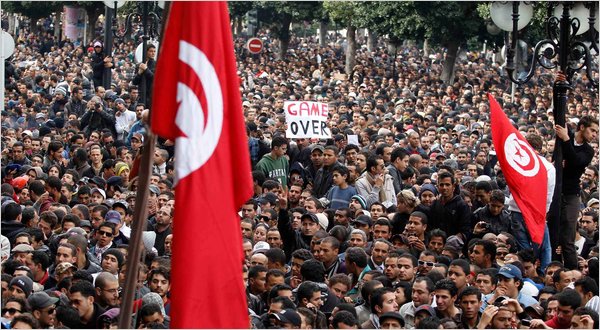
On December 17th, 2010, a fruit street vendor named Mohamed Bouazizi set himself on fire before the governor office of the town of Sidi Bouzid, in continental Tunisia. The previous day, he had faced a confiscation of his goods by the local police – according to his family, it had been happening for years – and the governor wouldn’t hear his complaints. His dramatic gesture of desperation ignited a wave of protests first in Sidi Bouzid, then in the nearby cities, eventually spreading to the whole country: the Jasmine Revolution had begun. The extreme levels of unemployment and under-employment, which affected both the middle and lower classes are often regarded as the primary triggers of the upheavals.[21] In the years preceding the revolution, the total unemployment rate had been relatively stable, oscillating around a value of approximately 13% until 2011, when it surged to 18.3%.[22] This figure does not depict a totally unsustainable unemployment rate but is deflated by regime’s policies favoring public sector employment as a tool for securing political loyalty and controlling employment levels. Once the public sector saturated, young generations of highly educated individuals faced harsh unemployment levels.[23] Indeed, in 2010 the literacy rate among youth aged 15–24 was 97.2%, compared to 79.1% for the total population aged 15 and above.[24] This difference of nearly 20 percentage points suggests that the more highly educated segments of the labor force were predominantly found among younger cohorts: indeed, unemployment with advanced education experienced a steep increase from 21% in 2005 to 32.4% in 2010, with a sudden explosion in 2011 at 42.8%.[25] While it is true that the revolution scaled up partially because of a largely dissatisfied youth arising to protest against the regime, the youth bulge condition had already been shrinking for years and was, in 2009, on the verge of disappearing. Tunisian population surged in the last decades from 8.3 million in 1990 to 10.7 million in 2010, up to the current population of almost 12.3 million. While the total population has kept increasing, it has done so at a declining rate, from 2.1% in 1990 to 1.1% in 2010 and down to 0.6% in 2024.[27] The fertility rate declined from the high value of 3.4 in 1990 to 2.07 in 2010, close to the typical replacement-level threshold, and is still falling to date, with the last observation being 1.8 in 2023. [28] Tunisia’s fertility rate is currently one of the lowest in the Arab world, whose average fertility rate was 3.09 in 2023. [29] According to the Tunisian National Institute of Statistics, median age was 35.5 in 2024, with a low dependency ratio of 28% and an active population (15-59 years old) making up 60.3% of the population.[30] As of 2024, Tunisia has moved beyond the youth bulge and has entered the demographic dividend phase: with a low crude death rate of 6.071 per 1,000 people, a moderately low and declining birth rate of 13.748, and an overall decreasing population growth rate, [31] the country can currently be placed in the mid- to late-dividend stage. In 2024, 24% of the population was aged 0 to 14, a figure that has been declining in recent decades, while the share of those aged 65 and over stood at 9.5% and has been gradually increasing.[32]
Adopting the framework of the demographic transition theory, as a country moves from a youth bulge to a demographic dividend phase, the demographic window of opportunity opens, bringing both challenges and opportunities. In this stage, the population is typically left with heightened expectations over employment, education, healthcare, and overall well-being, as the large working-age share of the population becomes more educated, economically active, and conscious of its opportunities. This was the case in 2011 Tunisia, where the shift from a youth bulge to a demographic window of opportunity also coincided with the fall of Ben Ali’s regime, with the deriving increase in public expectations for job creation and better governance. However, as previously mentioned through Bloom et al. (2003), to meet such expectations and transform such demographic phase into growth, the state must make investments in key areas such as education, job creation through private sector bolstering policies, governance quality etc.[33] This was certainly not the case in Tunisia. The renewed political elite avoided undertaking substantial socio-economic reforms, and the economic indicators that had contributed to trigger the 2011 revolution, worsened by the shock of the revolution itself in its immediate aftermath, never showed significant improvement thereafter.[34] As previously mentioned, the generation that took part in the 2011 uprisings was largely driven by perceived political opportunities: the fracture between these expectations and the aftermath of a revolution that the entire world deemed as “successful” deeply eroded Tunisians’ trust in their institutions. In the years that followed, Tunisia registered a significant decline of trust in institutions: according to the Arab Barometer Wave IV Survey, 80.1% of Tunisian respondents reported having little to no trust in political parties, while 71.8% expressed low levels of trust in parliament. [35] Although Tunisia experienced improved democratic performance after the Jasmine Revolution, becoming one of the most democratic countries in North Africa, the root causes of the revolution itself remained largely unaddressed. In fact, the failure to resolve these issues steadily constructed a climate of tension that would ultimately erupt from 2020 onwards.
The Covid-19 pandemic was the first critical turning point: youth unemployment, after having skyrocketed to 42.6% in 2011, saw only a modest decline in the following years before increasing again with the pandemic, reaching 40.05% in 2024.[36] Similarly, overall unemployment reached a new peak of 16.2% in 2024, close to the 2011 level of 18.3%.[37] Alongside economic performance, Tunisia has faced significant political challenges in the same period, as President Kais Saïed’s power grab in July 2021 coincided with a sharp decline in Tunisia’s democratic performance. A report released by Amnesty International shows that the authorities have stepped up repression on dissent through repressive laws and unfounded accusations to silence critical voices such as political opponents as well as journalists, activists, lawyers, and human rights defenders, at the expense of judicial independence and the rule of law.[38] World Bank indicators assessing the quality of policies and institutions have shown a consistent decline in the years following 2020. Among the most important measures, the Rule of Law score fell from 0.14 in 2020 to -0.14 in 2024; Voice and Accountability decreased from 0.28 in 2020 to -0.21 in 2023; Control of Corruption declined from -0.12 in 2020 to -0.34 in 2023.[39]
The convergence of economic poor conditions due to institutional failure, of the COVID-19 pandemic and of an increasingly authoritarian leadership, acted as a powerful trigger for renewed public discontent. Unrest was deeply rooted in a long-standing erosion of trust in state institutions and unmet expectations following the 2011 revolution, therefore the recent wave of instability should be understood not as a sudden phenomenon, but as the inevitable outcome of a deep fracture between increasing societal expectations and a state unable to meet them.
Having acknowledged the nature of the protests, their future trajectories remain largely unsure. Adopting the framework of Richard Cincotta’s Age-Structural Maturity Thesis, we know that countries having an intermediate/mature age structure are more likely to support the development of liberal democracies.[40] In this sense, the current unrest should not be interpreted as a self-contained episode, but rather as the symptom of a structural demographic pressure that reveals the growing incompatibility between an aging population and the authoritarian governance model similar to the pre-2011 regime. According to Cincotta, a rising median age is expected to increase institutional capacity and decrease the risk of political violence, paving the way for a peaceful process of democratization.[41]
Conclusion
This paper analyzed the role of Tunisia’s ongoing demographic transition in renewed political unrest following the Arab Spring. Adopting the framework of the demographic transition theory, the paper argues that while the 2011 uprisings were ignited by the youth bulge condition of the time, the recent uprisings are rooted in the unmet expectations of the Tunisian populations after the shift from youth bulge to demographic dividend phase. Instead of capitalizing on its demographic window of opportunity, the renewed political elite avoided undertaking substantial socio-economic reforms, thus leading to a deep social frustration and mistrust in state institutions. The COVID-19 pandemic and the authoritarian turn under President Kais Saïed served as triggers for the protests. Therefore, the recent uprisings should not be seen as isolated events, rather as the consequence of a mismatch between an increasingly mature population and a governance model unable to coexist with the new demographic structure of the country. While future trajectories remain unsure, Age structural maturity theory suggests that Tunisia may be on a path towards full democratization.
[1] Gunnar Heinsohn, Sons and World Power: Terror in the Rise and Fall of Nations (Sohne und Weltmacht, 2003).
[2] Gary Fuller, “The Demographic Backdrop to Ethnic Conflict: A Geographic Overview. In CIA (Ed.), the Challenge of Ethnic Conflict to National and International Order in the 1990s,” in Central Intelligence Agency (Washington: CIA, 1995), 151–54.
[3] Jack A. Goldstone, “Population and Security: How Demographic Change Can Lead to Violent Conflict,” Journal of International Affairs 56, no. 1 (2002): 3–21, https://www.jstor.org/stable/24357881.
[4] Giuseppe Di Maio, “La Teoria Dello Youth Bulge E Le Rivolte Arabe Del 2011: Il Caso Della Tunisia,” 2020, https://tesi.luiss.it/28566/1/636912_DI%20MAIO_GIUSEPPE.pdf.
[5] Gunnar Heinsohn, Sons and World Power: Terror in the Rise and Fall of Nations (Sohne und Weltmacht, 2003).
[6] Paul Collier and Anke Hoeffler, “Greed and Grievance in Civil War,” Oxford Economic Papers 56, no. 4 (October 2004): 563–95.
[7] James Fearon and David Laitin, “Ethnicity, Insurgency, and Civil War,” American Political Science Review 97, no. 01 (February 2003): 75–90.
[8] Henrik Urdal, “A Clash of Generations? Youth Bulges and Political Violence,” International Studies Quarterly 50, no. 3 (September 2006): 607–29, https://doi.org/10.1111/j.1468-2478.2006.00416.x.
[9] Brooks, Deborah Jordan, Stephen G. Brooks, Brian D. Greenhill, and Mark L. Haas. “The Demographic Transition Theory of War: Why Young Societies Are Conflict Prone and Old Societies Are the Most Peaceful.” International Security 43, no. 3 (February 2019): 53–95. https://doi.org/10.1162/isec_a_00335.
[10] Richard P Cincotta and Hannes Weber, “Youthful Age Structures and the Risks of Revolutionary and Separatist Conflicts,” Springer EBooks, January 1, 2021, 57–92, https://doi.org/10.1007/978-3-030-73065-9_3.
[11] David E. Bloom, David Canning, and Jaypee Sevilla, The Demographic Dividend: A New Perspective on the Economic Consequences of Population Change (1700 Main Street, P.O. Box 2138, Santa Monica, CA 90407-2138 1200 South Hayes Street, Arlington, VA 22202-5050 201 North Craig Street, Suite 202, Pittsburgh, PA 15213-1516: RAND, 2003).
[12] Richard Cincotta, “The Age-Structural Theory of State Behavior,” Oxford Research Encyclopedia of Politics, August 22, 2017, https://doi.org/10.1093/acrefore/9780190228637.013.327.
[13] Dan LaGraffe, “The Youth Bulge in Egypt: An Intersection of Demographics, Security, and the Arab Spring,” Journal of Strategic Security 5, no. 2 (2012): 67, https://doi.org/10.2307/26463960.
[14] Henrik Urdal, “Youth Bulges and Violence,” in Political Demography: How Population Changes Are Reshaping International Security and National Politics, ed. Jack A. Goldstone, Eric P. Kaufmann, and Monica Duffy Toft (Oxford: Oxford University Press, 2012), 117.
[15] Michael Hoffman and Amaney Jamal, “The Youth and the Arab Spring: Cohort Differences and Similarities,” Middle East Law and Governance 4, no. 1 (2012): 168–88, https://doi.org/10.1163/187633712×632399.
[16] John R Bradley, After the Arab Spring: How Islamists Hijacked the Middle East Revolts (St. Martin’s Press, 2012).
[17] M. Chloe Mulderig, “An Uncertain Future: Youth Frustration and the Arab Spring,” The Pardee Papers No.16 (2013).
[18] The expression “Jasmine Revolution” was initially adopted by Western media to describe the Tunisian uprising that began in December 2010. The term was not favored by many participants in the revolt, who saw it as reductive. Interestingly, former president Ben ʿAlī had used the same term to describe his own 1987 coup. See Enciclopedia Treccani, s.v. “Rivoluzione dei gelsomini https://www.treccani.it/enciclopedia/rivoluzione-dei-gelsomini_(Lessico-del-XXI-Secolo)/
[19] Alcinda Howana, “Youth and the Tunisian Revolution,” Conflict Prevention and Peace Forum Policy Paper, 2011.
[20] See note 17.
[21] Gilbert Achcar, The People Want: A Radical Exploration of the Arab Uprising / (Oakland, Ca: University Of California Press, 2013).
[22] World Bank, “Jobs | DataBank,” databank.worldbank.org, 2025, https://databank.worldbank.org/source/jobs.
[23] Giuseppe Di Maio, “La Teoria Dello Youth Bulge E Le Rivolte Arabe Del 2011: Il Caso Della Tunisia,” 2020, https://tesi.luiss.it/28566/1/636912_DI%20MAIO_GIUSEPPE.pdf.
[24] World Bank, “Education Statistics – All Indicators | DataBank,” databank.worldbank.org, 2025, https://databank.worldbank.org/source/education-statistics-%5e-all-indicators.
[25] Ibid.
[26] World Bank, “Health Nutrition and Population Statistics | DataBank,” databank.worldbank.org, 2025, https://databank.worldbank.org/source/health-nutrition-and-population-statistics. “Current population” figure refers to the year 2024, last observation available.
[27] Ibid.
[28] Ibid.
[29] Ibid. World bank website aggregate “Arab world” is composed of the members of the Arab league, i.e. Algeria, Bahrain, Comoros, Djibouti, Egypt, Iraq, Jordan, Kuwait, Lebanon, Libya, Mauritania, Morocco, Oman, Palestine, Qatar, Saudi Arabia, Somalia, Sudan, Syria, Tunisia, United Arab Emirates and Yemen. See https://en.wikipedia.org/wiki/Member_states_of_the_Arab_League.
[30] INS, “Recensement Général de La Population et de l’Habitat 2024 | INS,” Www.ins.tn, 2024, https://www.ins.tn/enquetes/recensement-general-de-la-population-et-de-lhabitat-2024.
[31] World Bank, “Health Nutrition and Population Statistics | DataBank,” databank.worldbank.org, 2025, https://databank.worldbank.org/source/health-nutrition-and-population-statistics.
[32] Ibid.
[33] David E. Bloom, David Canning, and Jaypee Sevilla, The Demographic Dividend: A New Perspective on the Economic Consequences of Population Change (1700 Main Street, P.O. Box 2138, Santa Monica, CA 90407-2138 1200 South Hayes Street, Arlington, VA 22202-5050 201 North Craig Street, Suite 202, Pittsburgh, PA 15213-1516: RAND, 2003).
[34] Rory McCarthy, “Transgressive Protest after a Democratic Transition: The Kamour Campaign in Tunisia,” Social Movement Studies, September 1, 2021, 1–18, https://doi.org/10.1080/14742837.2021.1967128.
[35] “Arab Barometer Wave IV – Arab Barometer,” 2016, https://www.arabbarometer.org/surveys/arab-barometer-wave-iv/.
[36] World Bank, “Health Nutrition and Population Statistics | DataBank,” databank.worldbank.org, 2025, https://databank.worldbank.org/source/health-nutrition-and-population-statistics. “Current population” figure refers to the year 2024, last observation available.
[37] Ibid.
[38] Amnesty International, “Tunisia: ‘We Were Only Asking for Our Rights and Dignity’: Obstruction Charges Used to Punish Peaceful Assembly – Amnesty International,” Amnesty International, June 17, 2025, https://www.amnesty.org/en/documents/mde30/9372/2025/en/.
[39] World Bank, “World Development Indicators,” The World Bank, 2024, https://databank.worldbank.org/source/world-development-indicators.
[40] Richard Cincotta, “The Age-Structural Theory of State Behavior,” Oxford Research Encyclopedia of Politics, August 22, 2017, https://doi.org/10.1093/acrefore/9780190228637.013.327.
[41] Ibid.


 Osservatorio Strategico Mediterraneo Allargato